What Wedding Stationery Do You Actually Need? The Complete 2026 Checklist
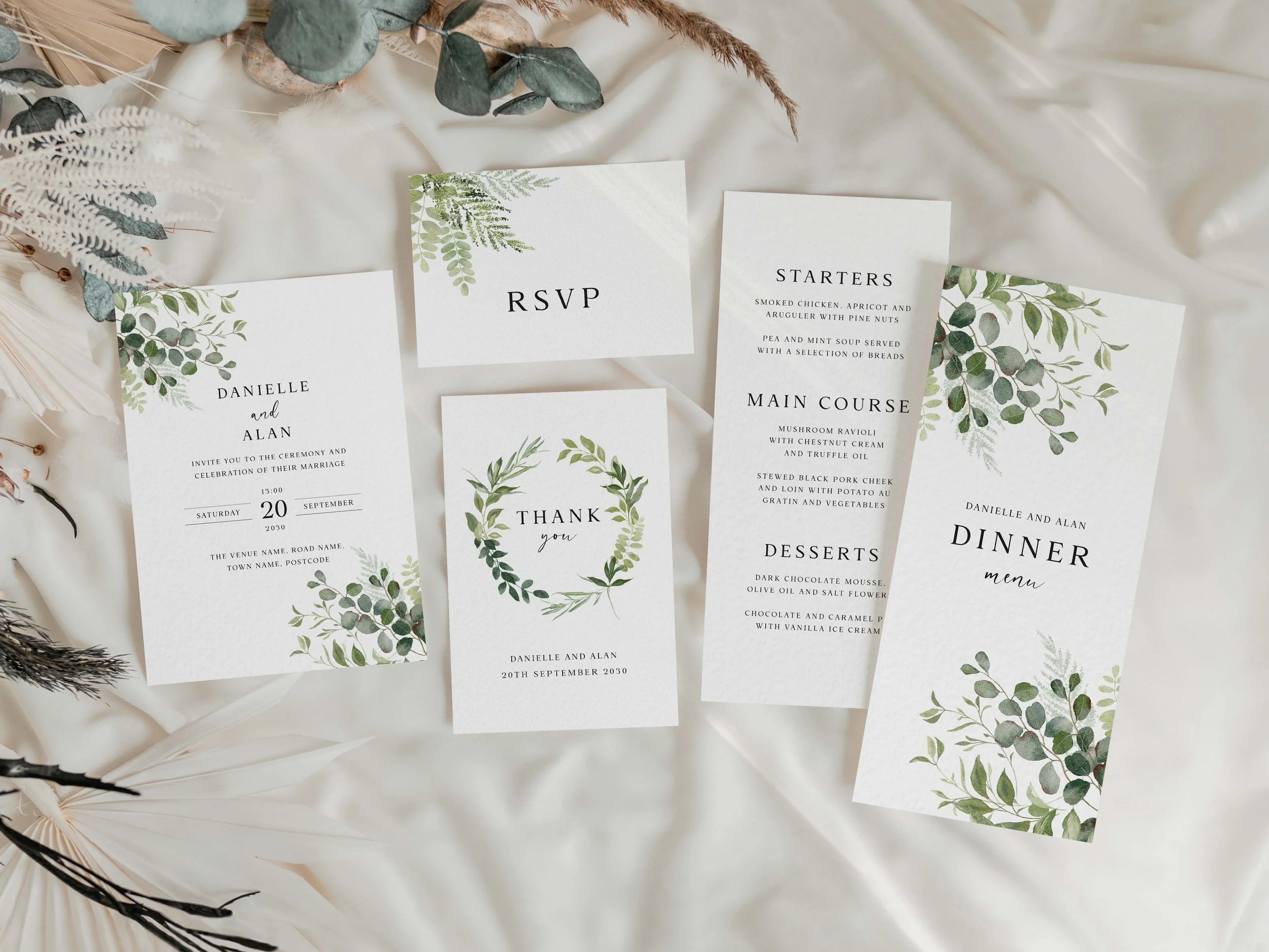
The Greenery Collection
If you've just got engaged and started looking at wedding stationery, you'll quickly discover there are far more items available than you probably expected. Save the dates, invitations, RSVP cards, details cards, order of service, menus, place cards, table plans, welcome signs, and thank you cards — and that's before you get into the smaller additions like bar menus and post box signs.
The good news is that you don't need all of it. What you need depends on the size and style of your wedding, your venue, and your budget. This guide walks you through every item, what it's for, whether it's essential or optional, and how to build a suite that works for your day without overcomplicating it.
The Essentials: What Every Couple Needs
There is really only one piece of wedding stationery that every single couple needs, and that's the invitation. Everything else sits on a spectrum from highly recommended to entirely optional depending on your circumstances.
Your wedding invitations give guests the date, time, venue, and RSVP instructions. They set the tone for the day before guests have seen a single flower or fairy light — and they're the piece of stationery that guests keep. Years after your wedding, an invitation pinned to a noticeboard or tucked into a drawer is still doing the work of representing your day. It's worth getting right.
Browse our full wedding invitation collection
Save the Dates: When You Need Them and When You Can Skip Them
Save the dates are sent well in advance of your formal invitation — typically 9–12 months before the wedding — to give guests early notice of the date before full details are confirmed.
You genuinely need save the dates if your wedding falls in peak summer season (June, July, or August), on or near a bank holiday weekend, at Christmas or New Year, or if a significant number of your guests are travelling from abroad or need to arrange childcare. In any of these situations, early notice makes a real difference to attendance.
If your wedding is on a quieter date with a local guest list and a timeline of less than six months, you can often skip save the dates entirely and go straight to invitations. But if there's any doubt, send them. The cost is small and the goodwill is significant.
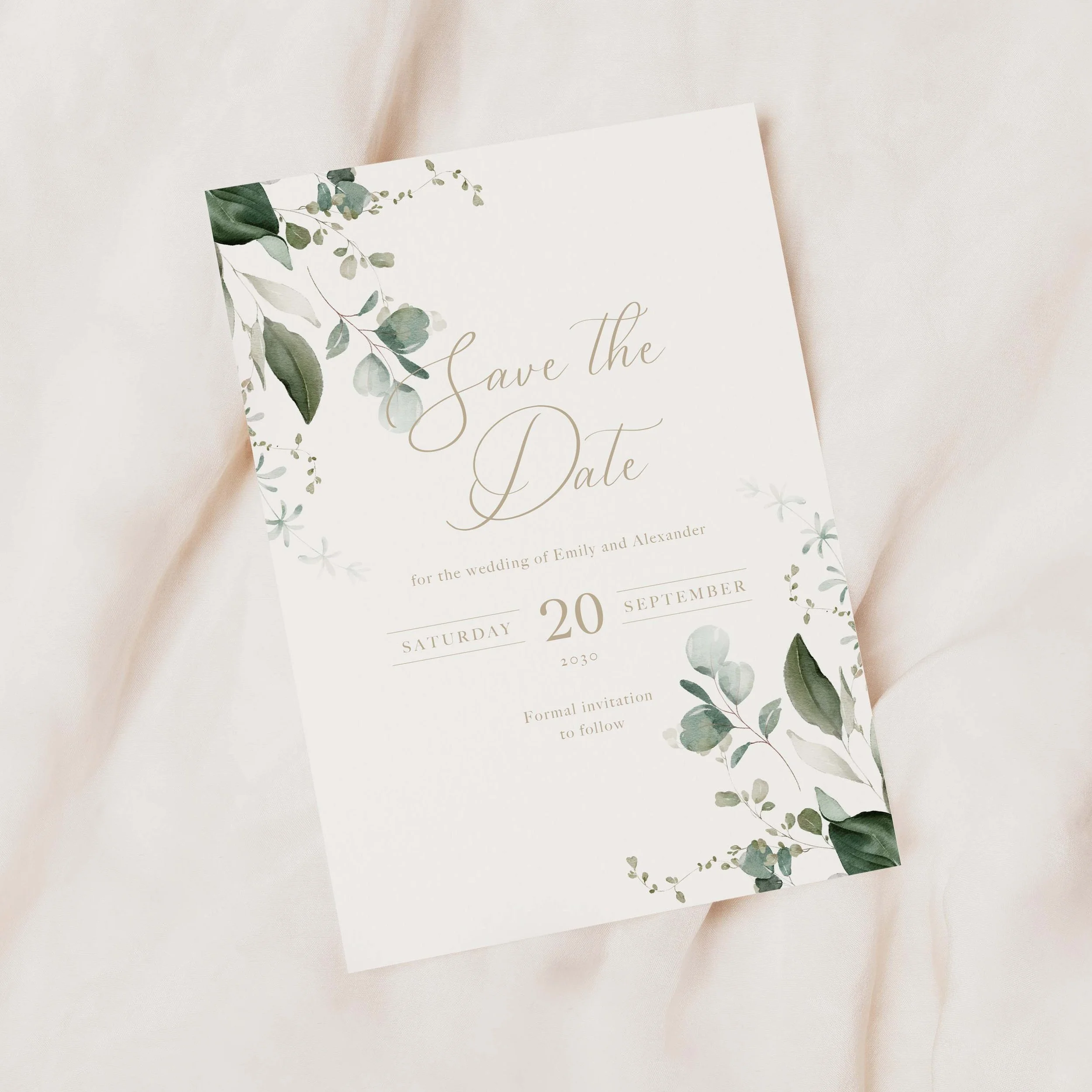
The Emerald Forest Save the Date Card
RSVP Cards: Printed vs Digital
RSVP cards are sent inside the invitation envelope and returned by guests to confirm attendance. They're strongly recommended because they make the response process easy — guests are more likely to reply promptly when the mechanism is right there in front of them.
The alternative is a digital RSVP through your wedding website, which works well for younger guest lists and destination weddings where guests are used to managing everything online. Many couples use a combination: a printed RSVP card for older guests who prefer something physical, with a website link included on the invitation for those who'd rather reply digitally.
One practical note: printed RSVP cards follow the same quantity rule as invitations — one per household, not per guest.
Details Cards: Do You Need a Separate Information Card?
A details card is a separate card included with your invitation that carries additional information — accommodation options, travel directions, dress code, or a link to your wedding website. It keeps the invitation itself clean and uncluttered while giving guests everything they need.
Whether you need one depends on how much information you're communicating. If you have a straightforward local wedding with no accommodation logistics, a wedding website covers the details adequately and you can skip the printed card. If you have guests travelling, multiple venue locations, or complex logistics, a printed details card earns its place.
Browse our wedding details cards
On-the-Day Stationery: What Actually Makes a Difference
On-the-day stationery is where couples often either overspend on things that don't matter or underspend on things that do. Here's an honest assessment of each item.
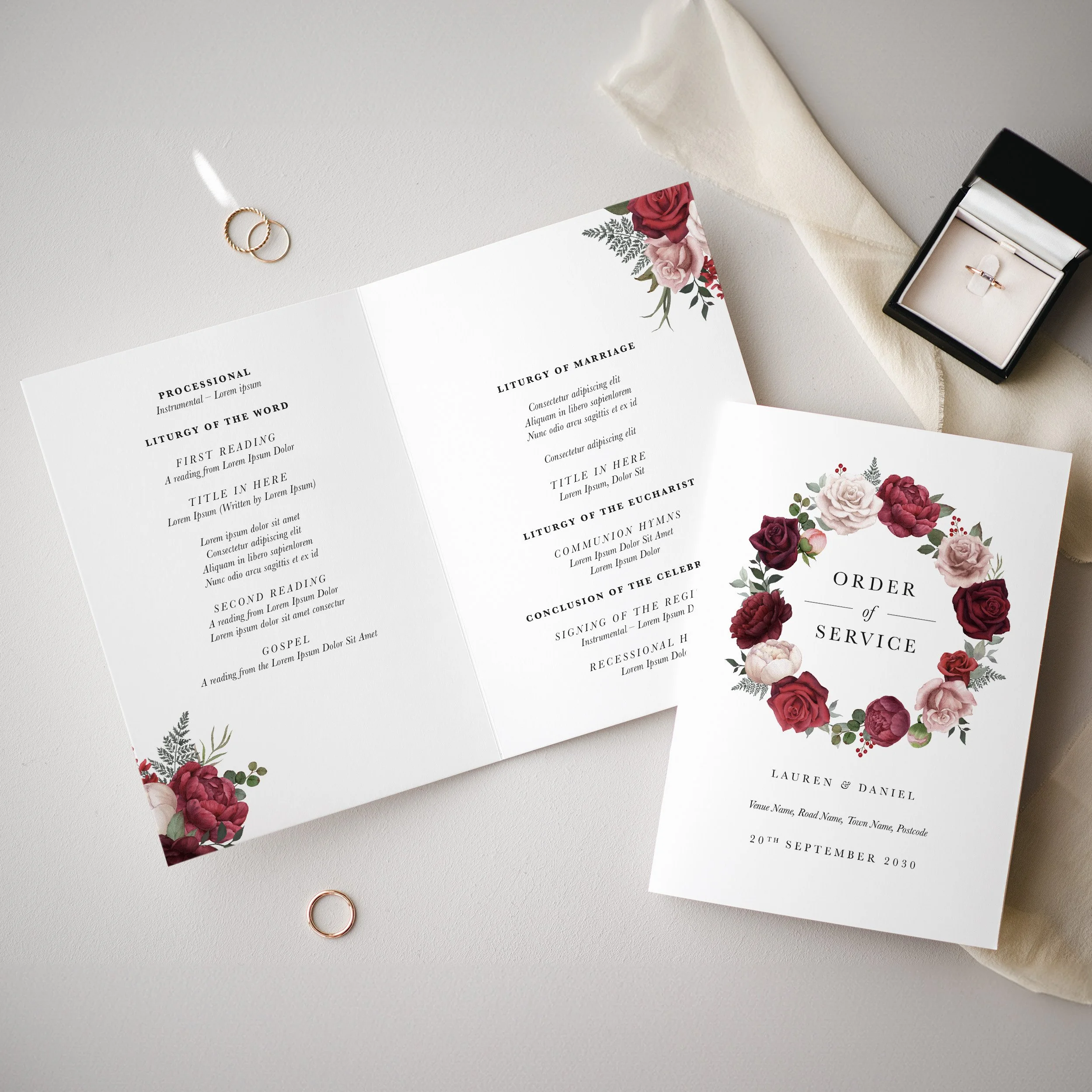
Order of Service
Essential for a church ceremony with hymns and readings that guests need to follow. Optional for a civil ceremony, though a simple programme is a thoughtful touch. Order one per guest for a church ceremony; one per couple is sufficient for a civil service.
Wedding order of service booklets
Welcome Sign
One of the highest-impact single items in your stationery budget. It's the first thing guests see when they arrive, it's in almost every set of wedding photos, and it sets the tone before anything else. If you're only adding one piece of on-the-day stationery to your order, make it this.
Browse our wedding welcome signs
Table Plan
Essential for any seated wedding reception. Every guest needs to know where they're sitting, and a clearly displayed seating plan removes a significant amount of arrival-hour chaos. Order it as large as your display space allows — it needs to be readable at a glance from a few steps away.
Wedding table plans and seating charts
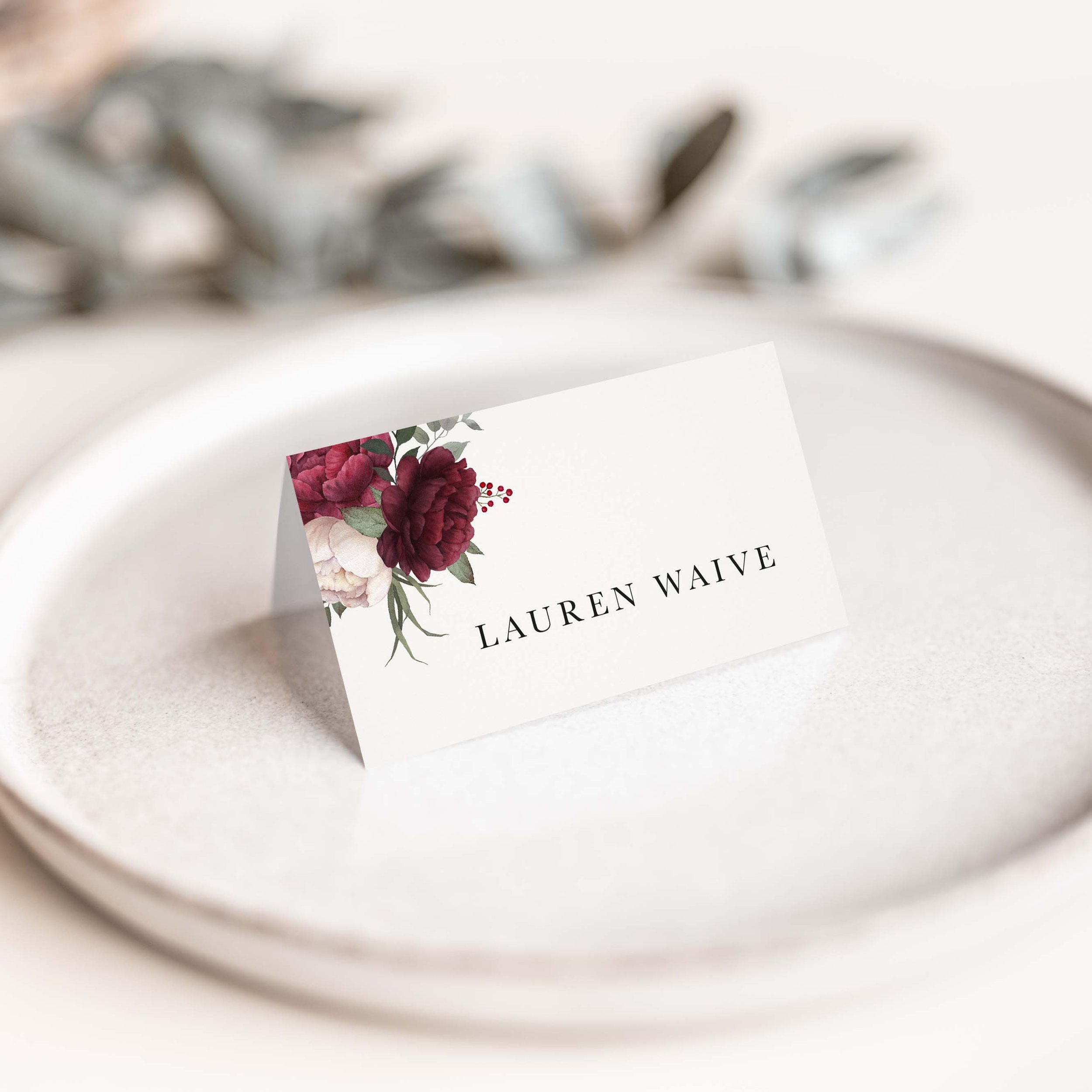
Place Cards
Recommended for formal dinners and any wedding where dietary requirements mean guests need to be in specific seats. One per guest, not per couple. If you've gone to the effort of a seating plan, place cards complete the process and prevent guests reshuffling within tables.
Menus
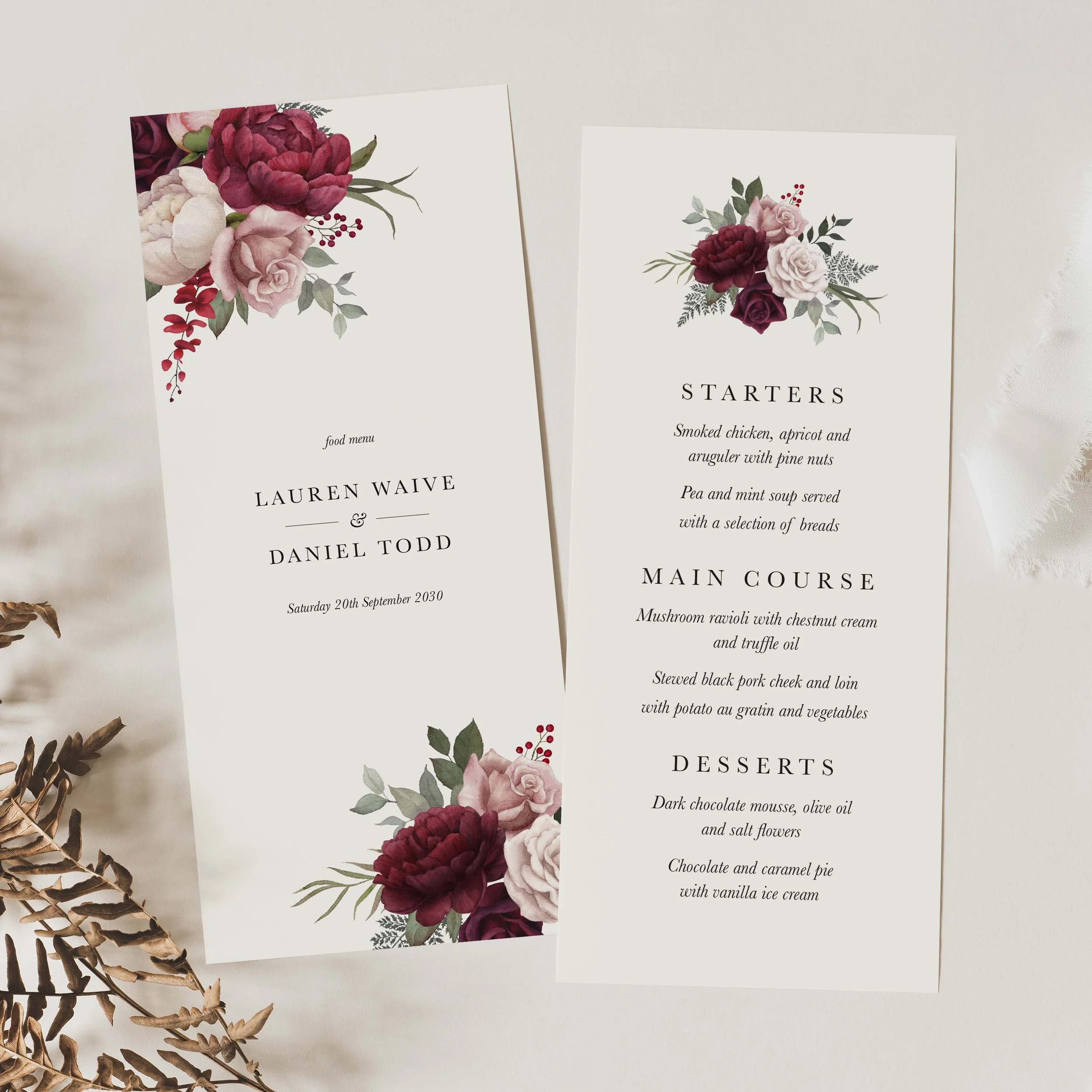
Optional but popular. A printed menu at each place setting adds a polished, considered touch to the table and gives guests something to read during the wait between courses. One per guest.
Should All Your Stationery Match?
Yes — and this matters more than many couples realise at the start of the process.
Using one design across your save the dates, invitations, and on-the-day stationery creates a thread that runs through the entire wedding experience. Guests who received your botanical invitation six months ago will recognise the same design on the menu at their place setting — it's a small detail that signals care and consideration. It also makes the planning process significantly easier, because you're making one design decision rather than ten.
Most of our designs at Wonder Wedding Stationery are available across the full suite — from save the dates through to thank you cards — so you can order everything in one place and know that every piece coordinates perfectly.
Thank You Cards: The Finishing Touch That Matters
Thank you cards are the last impression your stationery makes — and one of the most memorable. Sent 6–8 weeks after the wedding, a handwritten thank you card in a design that matches your invitation suite is one of those details that guests genuinely notice and appreciate.
They're not essential in the sense that your wedding won't fall apart without them, but they're one of those small investments that costs relatively little and means a great deal. Order them at the same time as your invitations to guarantee the design matches, or return to order them after the wedding when the dust has settled.
Browse our matching wedding thank you cards
How to Build Your Suite Without Overcomplicating It
The simplest approach is this: start with the essentials (invitations, and save the dates if your situation calls for them), then add items based on your venue, guest list, and budget. You don't need to order everything at once — most couples order invitations first, then return for on-the-day stationery as the wedding gets closer and guest numbers are confirmed.
Choose a design you love and use it across everything. Order from one supplier. Keep it simple.
If you're still at the browsing stage, explore our full collection of over 80 coordinated designs — organised by colour, style, and season to make finding the right fit as straightforward as possible. And if you're ready to check quality before committing to a full order, we'd always recommend ordering a sample first.